Professional Cleaning Solutions
Your facility requires consistent cleaning schedules customized for specific risks, daily throughput, allergen management, and regulatory visits, including auditable records confirming HACCP requirements, inspection compliance, and public health regulations. The information following provide guidance on sanitation program requirements.
Key Takeaways
- Sanitation professionals from Brampton support restaurants, grocery departments, commissaries, warehouses, bakeries, schools, mobile vendors, and allergen-sensitive operations.
- High-touch surfaces, food-contact equipment, kitchens, floors, drains, restrooms, and storage areas are sanitized using sectional methods to eliminate cross-contamination.
- Validation of approved sanitizer dilution, suitability, and exposure duration is completed by approved providers, with finishing documented using samples, reviews, and correction logs.
- Daily, recurring, and annual activities designated by zone comprise maintenance schedules based on hazard, production volume, switches, spills, and requirements.
- Contractors need to exhibit HACCP, health regulatory knowledge, WHMIS education, protection, testimonials, color-categorized implements, and audit-ready hygiene records.
Brampton Facilities That Need Food Safety Cleaning: Which Ones?
You must comply with food safety cleaning if your facility is regulated by health inspections, food codes, or HACCP protocols. This covers restaurants, cafeterias, commissaries, grocery food departments, butcher shops, seafood counters, convenience stores, and institutional kitchens.
You'll furthermore need proper hygiene protocols in storage centers, processing facilities, refrigerated warehouses, bakery retailers, school nutrition programs, event halls, and delivery centers. Mobile and temporary operations matter as well, like food trucks, event sellers, and temporary stalls. If your team process ingredients, portion ready-to-eat items, reheat products, or store allergens, your facility requires written cleaning standards. In Brampton, cleanliness continues to be mandatory; it forms legal, operational, and consumer protection compliance.
Which Areas Do Brampton Cleaning Experts Cover?
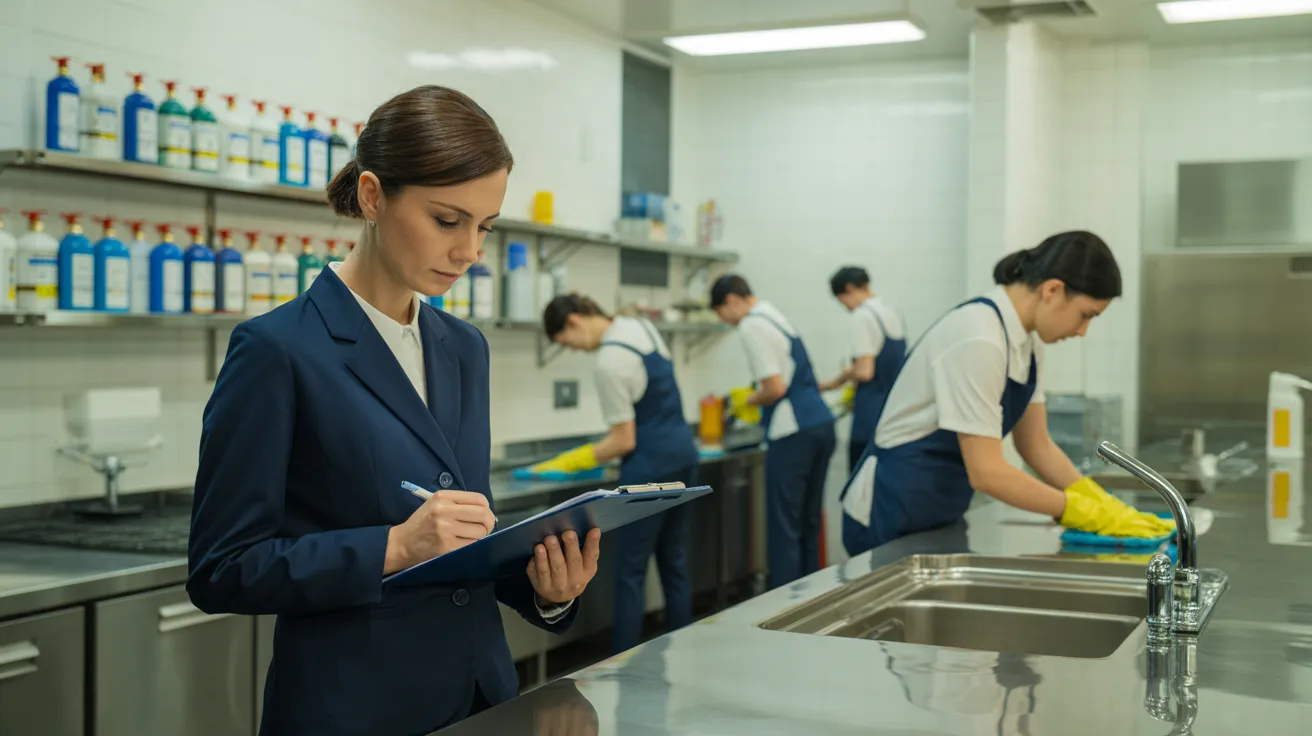
You need skilled cleaning experts who sanitize frequently touched areas, cooking areas, flooring, and restroom facilities to ensure compliance with food safety and health standards. These areas are targeted because they carry the greatest contamination risk, slip and fall dangers, and health code violations.
When you know their cleaning scope, you can verify that your facility's cleaning scope meets operational and regulatory requirements.
Focusing on High-Touch Surface Disinfection
Brampton janitorial experts prioritize high-touch surface sanitizing because these touch areas can distribute bacteria, viruses, and food residue throughout a establishment. You must have a scheduling system for sanitizing all high-touch items including handles, plates, switches, railings, control surfaces, POS systems, and refrigeration equipment. Applying touchpoint mapping, specialists determine every commonly touched area and determine cleaning timing
validate successful sanitization
Food Prep Areas, Flooring, and Sanitary Facilities
Professional cleaners in Brampton concentrate on kitchens, floors, and restrooms given that each location involves distinct food safety, falling hazards, and public health requirements. In industrial kitchens, you need grease removal from cooking stations, appliance surfaces, drain systems, preparation areas, and backsplashes to minimize bacterial growth and pest activity.
Documented floor care is also provided as part of the service.
Restroom sanitation requires disinfecting touch areas, bathroom equipment, stall barriers, supply stations, and bins, restocking supplies and controlling odours. They also maintain restaurant cleaning supply rooms where product storage, sink cleanliness, and drain systems impact daily sanitation standards and worker protection.
Why Food Safety Cleaning Matters in Brampton
Brampton businesses need to implement food-safe cleaning standards for meeting legal standards and obtaining approval. You also minimize cross-contamination by cleaning and sanitizing food-contact surfaces, equipment, and high-touch areas correctly. Most importantly, you safeguard community wellness by reducing the chance of food poisoning in your establishment.
Regulatory Code Requirements
Brampton food companies must comply with strict public health standards, so hygiene maintenance is critical to adhering to health codes, defending customers, and sidestepping penalties. You must maintain sanitary food-contact surfaces, documented cleaning schedules, safe chemical management, and verifiable staff procedures that meet municipal and provincial inspection expectations.
Strong sanitation aids in controlling allergens by limiting particles buildup on common tools and commonly contacted zones.
Cross-Contamination Prevention
Adhering to regulatory guidelines requires your skill in preventing cross-contamination throughout routine preparation and sanitation work. You need to separate raw ingredients from ready-to-eat foods, clean prep surfaces between tasks, and keep chemicals away from food-contact items. Structured procedures reduce transfer risks and maintain ongoing regulatory adherence.
Building allergen isolation prevents key allergens from reaching common workstations, storage, or apparatus. Leverage separate cutting boards, colored implements, and precise instrument labeling so staff don't mix items during preparation or service.Enforce handwashing after handling raw meat, seafood, eggs, or allergen-containing products. Swap wiping cloths regularly, and confirm sanitizer strength with test strips. When your team follows these practices every shift, you foster a cleaner, more secure operation that exceeds Brampton's safety standards daily.
Community Health Protection
When sanitation protocols fails, you don't just face inspection failure—you heighten the likelihood of foodborne relevant resource illness impacting customers, staff, and the wider Brampton community. You also weaken your role in safeguarding community wellness, especially in high-traffic food premises where pathogens travel quickly through surfaces, equipment, and touchpoints.
You need sanitation procedures that eliminate contaminants, sanitize correctly, and verify results. That means following exposure periods, employing authorized sanitizers, documenting schedules, and educating employees to meet health-unit expectations. These measures facilitate disease prevention by lowering microbial loads before they contaminate surfaces or food. In Brampton, rigorous cleaning protects vulnerable populations, limits outbreak potential, and helps you demonstrate due diligence. When you clean to standard, you exceed basic requirements—you actively reduce risk and promote secure food handling throughout the region.
How Can Cleaning Practices Ensure Food Safety Compliance?
Following strict sanitation practices backs food safety compliance by minimizing contamination hazards, managing pathogen expansion, and positioning your facility in accordance with sanitation requirements under HACCP-based programs and public health regulations. You ensure that product-contact areas appear visibly clean and microbiologically controlled, supporting documented preventive controls and inspection readiness.
Rigorous cleaning standards also strengthen allergen management by eliminating residues that can provoke undeclared allergen exposure.
What's the Ideal Time to Arrange Commercial Cleaning?
Schedules for cleaning perform best when established based on risk, production volume, and regulatory requirements instead of just a set calendar.
closures, weather-related soil buildup, or pest pressure periods.
Selecting the Right Brampton Cleaning Experts: Key Considerations
Screen providers initially by their food-safe sanitation requirements—not budget alone. You need to confirm that every company meets CFIA, public health, and HACCP standards for your operation. Demand proof of insurance, WHMIS compliance, training records, and management systems. Evaluate technician understanding of cross-contamination risks, chemical safety, and documented sanitation practices.
Additionally, you need to evaluate service dependability and responsibility. Obtain references from food facilities in Brampton, then review service speed, corrective measures, and communication practices. Verify the company supports supplier audits and can deliver compliance-ready records when inspectors or external parties need proof. Verify equipment is maintained, color-coded equipment are applied correctly, and site-specific hazards are identified. A qualified provider protects compliance, product integrity, and your brand reputation.
What does a Food Safety Cleaning Plan consist of?
Create a documented strategy that clearly outlines every sanitation task, standard, and responsibility before production starts. You should list cleaning frequencies, approved chemicals, dilution rates, contact times, tools, and verification methods for each area, section, and machine. Don't forget to add pre-operational inspections, corrective actions, and employee training requirements.
Your plan should also address prevention of contamination, waste management, pest-control tactics, and scheduled records for facilities, drains, flooring, and food-preparation surfaces. Outline how you'll separate raw and ready-to-eat processes, facilitate ingredient tracking, and maintain accurate allergen labeling through validated cleaning between product changes. You should establish accountability, document signed records, and evaluate results against regulatory standards, HACCP controls, and customer requirements. When gaps appear, update procedures immediately and retrain staff.
Popular Asked Inquiries
Are sanitation providers available for nighttime operations in Brampton properties?
Yes, you can book cleaning services to manage overnight shifts in Brampton facilities. You'll coordinate nighttime cleaning around operational windows, access controls, and personnel needs. Providers typically establish nightshift procedures to reduce disruption, maintain standards, and document completed tasks. You should confirm arrival timeframes, supervision, access protocols, and waste handling before beginning service. If you operate regulated spaces, you'll also want cleaning records that enable audits and compliance verification.
Can Brampton cleaning experts manage emergency spill response?
Yes, you can find many Brampton sanitation experts offering spill containment services. They handle contamination, evaluate risks, contain affected areas, and execute rapid cleanup to minimize risk and limit operational impact. You should verify response times, certifications, safety measures, and procedures. If your facility needs compliance, pick a provider that documents incidents, maintains standards, and ensures verification.
Will green disinfectants protect safely food preparation areas?
Absolutely, natural disinfectants prove to be secure for food-contact surfaces when you select products labeled food safe and satisfying regulatory requirements. You must confirm exposure duration, concentration levels, and rinse protocols ahead of deployment. Natural-based solutions minimize chemical hazards, though you require proof of efficacy against target microorganisms. For ensuring residue-free conditions, follow exact manufacturer guidelines and verify the disinfecting agent satisfies food industry regulations.
Do sanitation programs support seasonal variations?
Absolutely, maintenance plans can be customized for production fluctuations. Revise timing, staff levels, sanitizers, and verification steps to fit operational cycles while sustaining compliance standards. Minimize production downtime through scheduling cleaning around changeovers, peak volumes, and equipment use patterns. Also revise standard operating procedures, training, and facility monitoring to capture temporary risks, emerging allergens, or increased soil loads. Frequent reviews ensure the plan functional.
Do commercial cleaning providers coach your team in sanitation best practices?
Yes, commercial cleaners often train your staff on hygiene standards. You receive employee instruction on proper chemical use, exposure periods, contamination control, equipment disassembly, and documentation. They generally follow instruction with HACCP, GMP, and CFIA or regional health department requirements. Many perform sanitation audits to verify compliance, spot deficiencies, and strengthen remedial steps. This helps you maintain consistent procedures, succeed in audits, and reduce food safety risks daily.
Closing Remarks
Partnering with Brampton commercial cleaning and food safety professionals goes beyond tidying—it ensures your facility stays inspection-compliant and your protocols are defensible. From kitchen areas to production zones, each sanitized surface and maintained corner lessens contamination risk and avoids costly disruptions. By arranging service at suitable frequencies and implementing a thorough cleaning program, you shield your workforce, clients, and your image. In a heavily regulated sector, sanitary conditions are non-negotiable—they're critical to business success.